
Yarn RFQs: Keep NM, Ply and Length Together
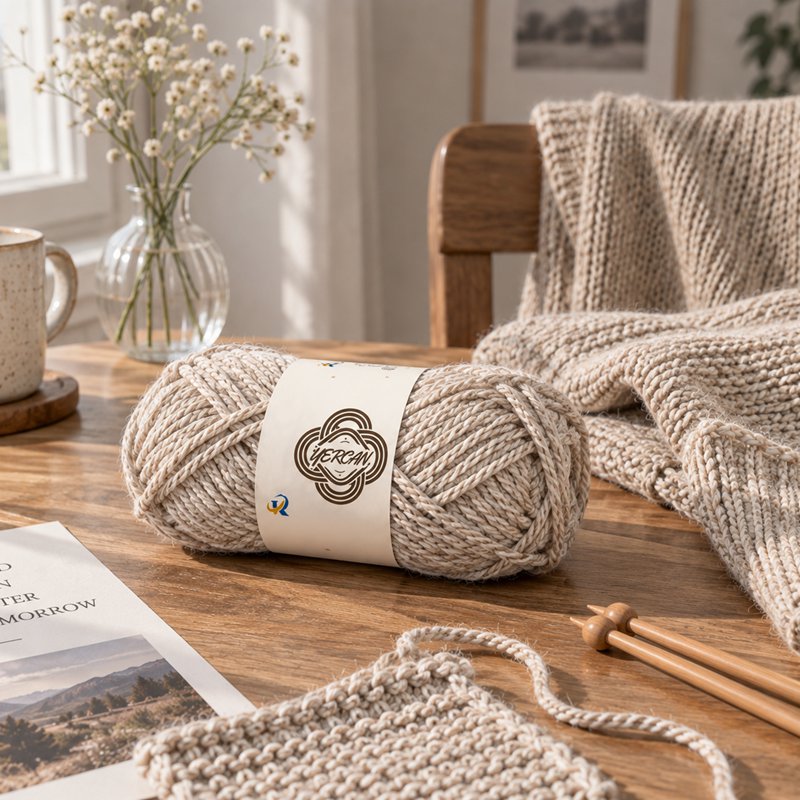
YK043 gallery appearance. The yarn, knitted pieces and styling props do not independently verify count, composition or supplied accessories.
For a yarn RFQ, record the catalogue code, NM count, ply and stated weight/length relationship together. Yercan lists YK043 with 9 NM, 3 Ply and 100g = 300m, while YK040 lists 9 NM, 4 Ply and 100g = 225m. Request confirmation of all fields for the offered reference. The shared 9 NM entry alone is not enough to describe the same quoted yarn.
This matters when purchasing teams compare wholesale wool yarn with a different fancy-yarn construction. One spreadsheet column headed “count” can hide differences that remain visible in the full product description. A useful enquiry preserves the original fields and asks the supplier how they describe the offered construction, without silently converting them into a different specification.
Build the quotation line from the actual product code
Start with the YK043 Wool Heather Yarn page. Its listed composition is 20% Wool, 80% Acrylic. Copy its 9 NM, 3 Ply and 100g = 300m fields beside that code. Keep the selected colour reference on the same line so the supplier can identify exactly which enquiry the technical response addresses.
If a different construction is proposed, ask for a separate response line with the proposed code and all three fields repeated. This is more useful than accepting “equivalent count” as a complete description. Retaining the original request alongside the proposal lets the buyer decide whether a difference is acceptable for the intended product.
Preserve the paired catalogue values
The YK040 Nylon Corrugated Yarn page calls the product Nylon Acrylic Fancy Yarn and declares 40% Nylon, 60% Acrylic. Its construction row says 4 Ply, alongside the 9 NM and 100g = 225m entries. These fields belong to that reference rather than to every yarn described as 9 NM.
Catalogue field
YK043
YK040
Declared composition
20% Wool, 80% Acrylic
40% Nylon, 60% Acrylic
Yarn count
9 NM
9 NM
Listed ply
3 Ply
4 Ply
Weight / length
100g = 300m
100g = 225m
Requested response
Confirm fields for offered YK043 version
Confirm fields for offered YK040 version
The table reproduces the observed catalogue wording. It does not establish measured results or explain the supplier’s count convention. Ask whether the NM entry describes a component or the finished construction and how it relates to the stated ply and length. Keep the answer with the quotation rather than correcting a field by inference.
Separate YK043 gallery presentation. Three pictured units do not establish the commercial pack count or confirm their net weight.
Separate a technical reference from the supplied format
The weight/length relationship is a specification reference; it should not automatically become an instruction to supply a particular retail ball. Both pages describe packing as “Made by your needs.” State the requested winding format and obtain its own supplier response, while retaining the catalogue relationship as a separate technical field.
For the technical enquiry, ask which values will appear on the sample identification sheet and the final offered specification. If the supplier provides updated values, request the date and the version to which they apply. Do not combine a revised ply entry from one response with an earlier length entry without asking whether they describe the same offered yarn.
Retain the original catalogue wording and product URL.
Request the count convention and confirmed ply together.
Link any revised weight/length entry to the same version.
Keep winding format and commercial quantities in separate fields.
Make the supplier’s response easy to reconcile
Give the supplier a response column beside each requested value. Use clear statuses such as confirmed as listed, proposed change or clarification required. A single “confirmed” at the bottom of a long message can be difficult to interpret when several yarns or custom versions are under discussion.
Attach the returned specification to the labeled sample using the same buyer line and supplier code. The purpose is identity control: a colleague should be able to connect the quotation, sample and count/ply/length record. It does not approve a knitted surface, prove composition or establish a performance result; those requirements retain their separate evidence.
YK040 gallery reference, a different product from YK043. The textured presentation does not establish interchangeability between the two constructions.
Frequently asked questions
Can two 9 NM listings be compared by that number alone?
Keep the full reference. These pages pair 9 NM with different ply and weight/length entries. Ask the supplier to explain and confirm the offered construction before treating the yarns as alternatives.
Should the buyer convert the count to another system?
Preserve the source wording first. If another count system is needed, request a supplier-confirmed equivalent for the specific construction and record its basis rather than making an unexplained spreadsheet substitution.
Does 100g = 300m promise a supplied 100g retail ball?
The field is labeled Weight / Length. Request the actual winding and packing format separately, including the net quantity and identification required for each supplied unit.
What information should accompany the enquiry?
Send both product links where comparison is intended, requested codes, count/ply/length fields and open questions. Use the Yercan contact page to request a response linked to each quotation line.
Yarn SpecificationsRFQ PreparationWool YarnWholesale Buying